


Overview:
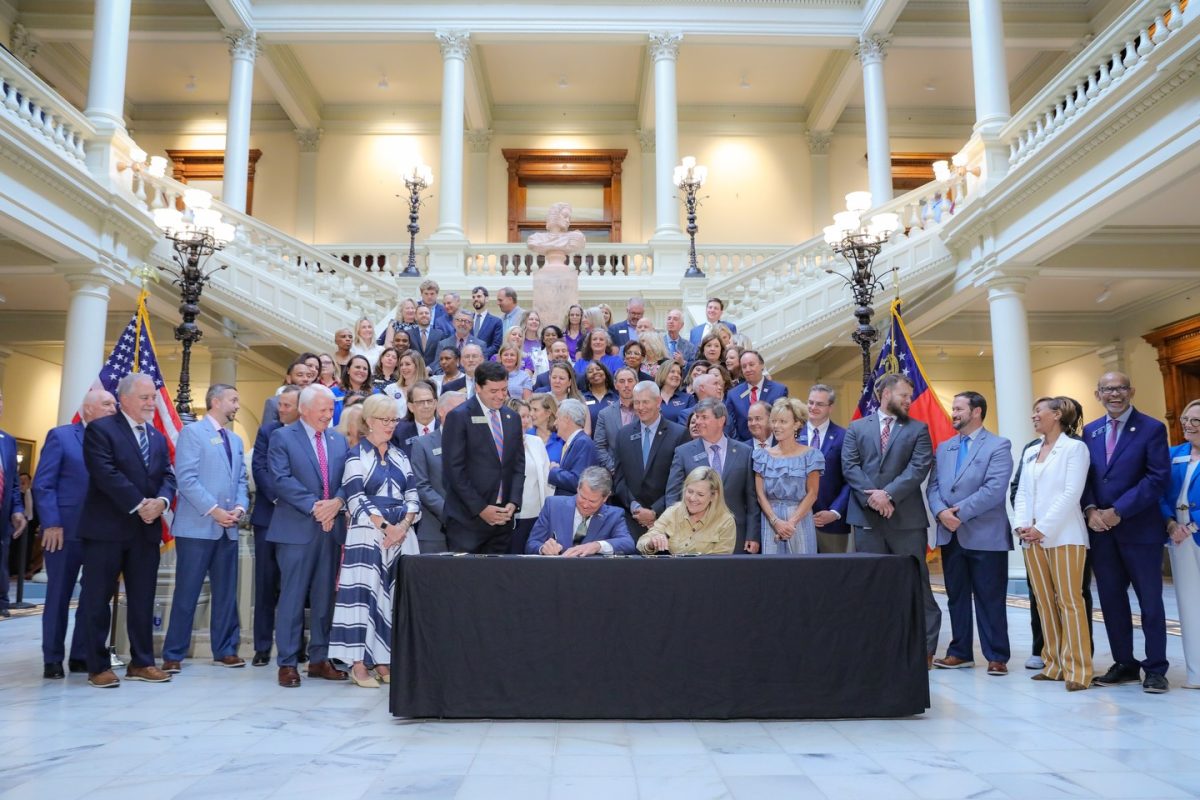
Georgia Gov. Brian Kemp signed a bipartisan education package into law that expands early literacy initiatives, bans cellphones in high schools beginning in 2027, and strengthens statewide efforts to improve student achievement and teacher support.
ATLANTA — Brian Kemp signed a major bipartisan education package into law Tuesday, including the Georgia Early Literacy Act of 2026, a sweeping initiative aimed at improving reading outcomes for young students across the state.
The legislation, considered a top priority for Jon Burns, expands Georgia’s existing literacy and dyslexia efforts through new curriculum standards, teacher training requirements, student assessments, and literacy support programs in elementary schools.
“This bill is a monumental step in our years-long work to ensure students have the literacy skills they need,” Kemp said before signing House Bill 1193 into law.
The measure adds approximately $70 million to Georgia’s education funding formula, providing enough funding to place classroom literacy coaches in more than 1,300 schools serving kindergarten through third-grade students.
Beginning this summer, Georgia education leaders will identify statewide literacy assessments to determine whether incoming students are reading at grade level. By fall, a literacy task force will begin reviewing and approving reading curricula rooted in phonics-based instruction and the “science of reading,” approaches supported by decades of literacy research. State universities will also be required to revise teacher preparation programs to align with the new standards.
Burns emphasized the broader impact of literacy on student success and long-term quality of life.
“Only one in three of our children can read on grade level when they leave the third grade. Unacceptable,” Burns said. “But I’m hopeful and I’m confident with Governor Kemp’s signature of the Early Literacy Act of 2026 today, we are well on our way to rewriting that narrative.”
Kemp also signed eight additional education bills Tuesday, including House Bill 1009, which expands Georgia’s school cellphone ban to include public high schools beginning in the 2027–28 school year.
The law builds on legislation passed last year that prohibited personal devices in kindergarten through middle school classrooms. Although the earlier ban officially takes effect during the upcoming school year, many districts implemented restrictions ahead of schedule.
“The improved outcomes following last year’s bill have been incredible,” Kemp said, “and this commonsense step will help both students and faculty learn in safer, distraction-free environments.”
Additional legislation signed Tuesday includes measures to expand afterschool access for pre-kindergarten students, strengthen partnerships between public schools and credit-recovery completion schools, and allow retired teachers to return to classrooms while continuing to receive pension benefits in an effort to address staffing shortages.
State leaders say the new literacy law represents one of Georgia’s most ambitious education reforms in recent years, with a focus on early intervention and long-term academic achievement.
Here is a recount of all of the education bills that were signed into law.
Governor Kemp signed nine pieces of legislation, which are included below:
HB 1193, sponsored by Representative Chris Erwin, was a legislative priority for Speaker Jon Burns and is known as the Georgia Early Literacy Act of 2026. It enacts a grant program to hire a literacy coach in every elementary school, expands kindergarten offerings, creates a statewide literacy task force, and empowers the Governor’s Office of Student Achievement (GOSA) to produce a state literacy plan.
HB 907, sponsored by Speaker Pro Tempore Jan Jones, updates some requirements and policies for completion schools to improve transparency and ensure they are meeting their purpose and target demographics. This follows the creation of completion schools by HB 87.
HB 1123, also sponsored by Speaker Pro Tem Jan Jones, expands childcare options for Georgia families by requiring schools with existing after-school programs to offer the program to pre-K students on the same basis as other students.
HB 1030, sponsored by Representative Sandy Donatucci, is known as the Math Matters Act and requires local boards of education to dedicate at least 60 minutes of core math instruction each day in grades four and five. It also requires the Georgia Department of Education to adopt content standards for advanced math courses for grades eight through ten, and support advanced math courses in grades six and seven. Additionally, it provides for the automatic enrollment of high-achieving math students into advance math courses in grades six through ten.
HB 1009, sponsored by Representative Scott Hilton, expands the prohibition of personal electronic devices in public schools to include high school grades nine through twelve. This was also a top priority of Speaker Jon Burns and builds on the success of HB 340, signed by the Governor in 2025, which banned these devices in K-8 classrooms.
HB 1107, sponsored by Representative Carmen Rice, requires the Georgia Professional Standards Commission to develop education preparation provider (EPP) performance measures to evaluate the performance of each program. It also requires GOSA to include a summary of the performance measures in the annual report on Georgia’s education workforce.
HB 1284, sponsored by Representative Deborah Silcox, requires local school boards to issue a high school diploma to enrolled high school students who have received a terminal medical diagnosis and are receiving end-of-life care.
SB 148, sponsored by Senator Bo Hatchett, authorizes local school boards to offer instruction in hunting safety, establishes a pilot program on outdoor learning spaces, and removes the requirement that a licensed physician must be involved with a school’s AED program. It also increases the number of sick days that a teacher may convert to personal leave from three days to five.
SB 150, sponsored by Senator Billy Hickman, builds on Governor Kemp’s previous efforts to establish a Return-to-Work program for educators by extending the program to 2030 and further easing pathways for Georgia teachers to return to the profession – especially in high-need areas.